
Luigi Mangione's Backpack Problem
Why People No Longer Trust Police or The Media

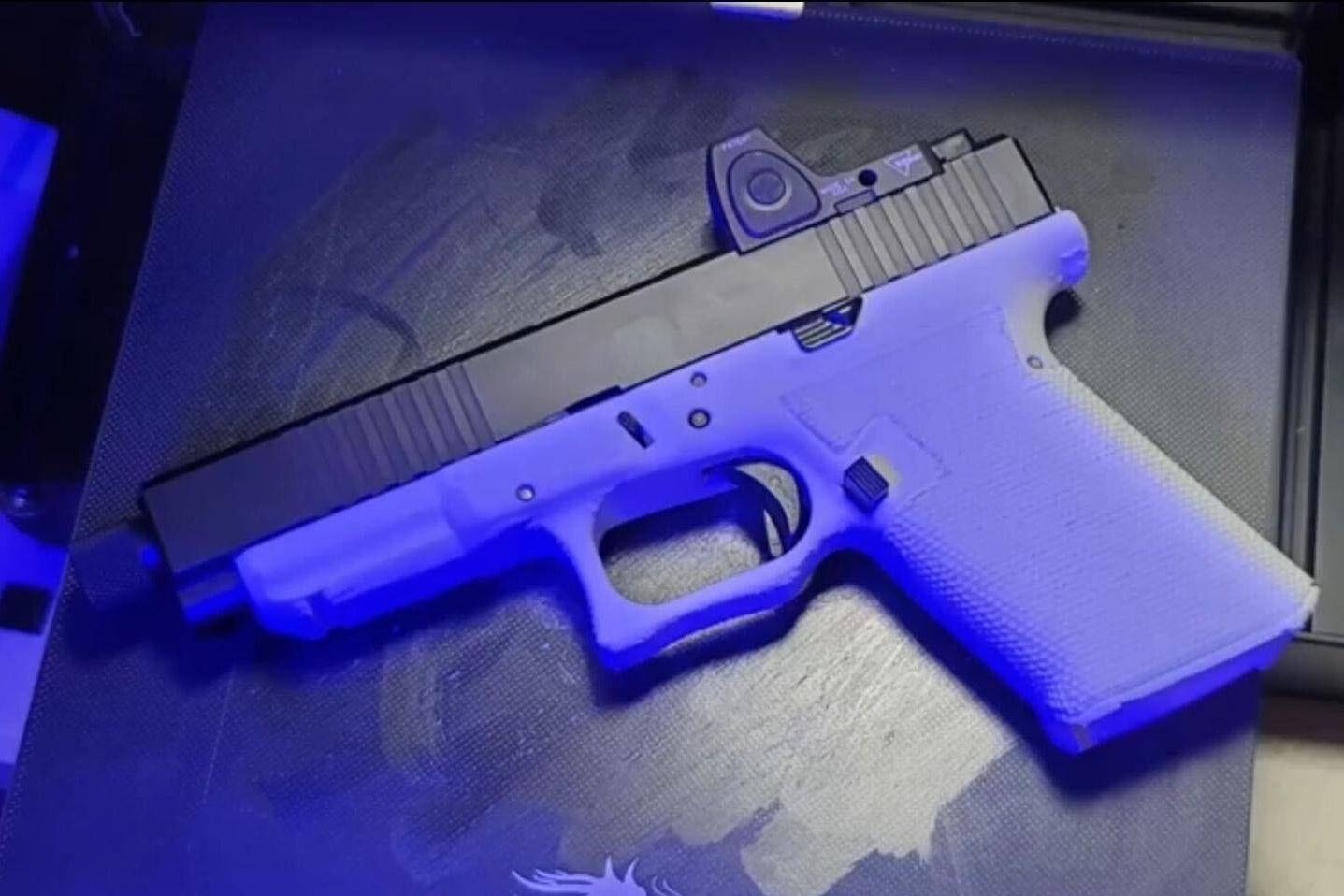
A suppression hearing is underway regarding the evidence to be used in the Luigi Mangione case. A detail has come out that should have prompted far more journalistic scrutiny than it has received, and the fact that it hasn’t helps explain why so many people no longer trust police, mainstream media, or the institutions that connect them.
According to sworn testimony and reporting from multiple major outlets, Mangione’s backpack was searched twice. The first search happened at the McDonald’s where he was arrested. A second search happened later, after he had been taken to police headquarters.
The first search (supposedly to confirm there was no bomb, which you would assume would be thorough enough to find a gun) reportedly turned up limited items. Most importantly, no gun was found.
The second search allegedly produced much more serious evidence, including a gun. This was not necessarily the gun used in the killing, earlier reported as a 3d printed “ghost” gun. Not even one outlet I can find mentions the gun found in the second search as a 3d printed gun or a “ghost gun.”
This sequence of events is not disputed. It appears openly in court proceedings and is covered by mainstream outlets such as the Associated Press, ABC News, PBS NewsHour, and Business Insider.
What is missing is any serious effort by those same outlets to show that this sequence should give pause.
To understand why, you don’t need legal training. You just need to think about how evidence works in everyday life. If you look through a bag once and say what’s in it, and then later say you found much more in the same bag after it has been out of sight and handled only by people who benefit from finding something, the natural question is not “Was this allowed?” but “Why should I believe the second version?”
Courts allow police to conduct more than one search under certain conditions. One search may happen at the scene of an arrest for safety reasons, and another may happen later as part of an inventory process. But this legal permission does not solve the fundamental trust problem created when a gun appears in a backpack upon a second search after the evidence was transported to a police station. The issue is not whether police were allowed to search again, but that there is no independent reason to trust it.
Between the first search and the second, the backpack was entirely under police control. It was not sealed in front of neutral witnesses. It was not continuously visible on camera. Its contents were documented only through police testimony after the fact. That means the public is being asked to accept, on trust alone, that nothing changed and the gun was missed the first time.
Mainstream media reports this as “a dispute between prosecutors and defense attorneys,” as if it were simply a technical legal argument. I have seen no mainstream outlet call any attention to this whatsoever. There is no scrutiny at all.
This does not require believing that the police (or anyone) planted evidence. However, it does make it a distinct possibility (and, full disclosure, I have reminded people that those in custody are innocent until proven guilty and noted the incentives to arrest Mangione, specifically, many times). Furthermore, assuming the gun was there, we are expected to interpret “gun" as meaning "this is the bad man!" without any real indication (or proof) that it is the gun.
Seeing this as a massive oversight (at the bare minimum) requires only recognizing that when one institution controls the object and all information about it, skepticism is rational. The order of operations and lack of transparency raise serious questions about the credibility of the second search.
So why doesn’t mainstream media dwell on this? Part of the answer is habit. Crime reporting in the United States relies heavily on police narratives. Journalists summarize testimony rather than interrogating its implications. Challenging police procedure too directly is often treated as advocacy rather than analysis.
There is also a deeper reason. If major outlets openly explained why later-discovered evidence is structurally unreliable, that understanding would apply to countless past cases and many ongoing ones. It would force readers to reconsider how often “evidence” is really just institutional assertion.
That kind of reckoning is destabilizing and leads to many questions, among the first of which is “why is the media so fucking dishonest?”
This is why public distrust keeps growing while institutions act confused about its source. People are not rejecting authority because they’re crazy. They are noticing patterns. The timeline, lack of transparency, and order of operations create massive credibility issues, and the mainstream media acts like we’re not supposed to notice or care.
Again, Luigi Mangione is innocent until proven guilty. Everyone in any legal trouble should be, and many have completely bypassed that, deciding his guilt and labelling him a villain or even a folk hero due to it. Mangione is a convenient person who would tie up a bunch of loose ends in a situation that frankly shouldn’t have been this easy to solve. Inconsistencies have been noted (by regular people and not by journalists, sadly). It is possible he’s not the killer, and evidence oversights don’t make that less likely.
I’ve also said a lot about the celebration of the killing of the CEO and its positive ascription to Mangione, which is not only a misunderstanding of how change actually happens, but also encourages the public to believe that a person who has not been proven to have committed a crime belongs in prison. I don’t care what you think about the crime; if a person who didn’t do it goes to prison for it, that is a tremendous injustice.
But the media doesn’t care. They call no attention to this, but instead focus on how Brian Thompson was a “father of two.” Do I think that is sad? Yes, but I do not think that justifies ignoring serious problems with evidence in what seems to be an attempt to manage public opinion once again.
Perhaps the authorities are also aware that the public, awash in various media "police procedurals" ("copaganda", to the likes of us); must be kept trained to view such matters from the viewpoint of police and no one else.
Because a public who can pick out such details as a defense attorney might can conceivably get on juries and give the system intense difficulties.
I live in Israel and unfortunately it seems that the same doesn't apply there. The general public still fully trusts what's being reported in the media, including reports on hostile intentions of Palestinians and the righteousness of the Israeli military. The media shows them ammunition that was allegedly hidden inside a hospital in Gaza, with Israeli soldiers present, and the public fully eats it up. I wish that kind of change you're talking about already happened there. I also hope Israel's institutions sooner rather than later lose much of their ability to function and the harm they can cause reduces by much